The Short Answer
Back pain rarely stays in your back: it shortens your patience, interrupts your sleep, makes you worry about getting worse and can quietly pull you away from people and activities you enjoy. Pain and mood also feed each other, because stress and poor sleep make pain feel stronger. The good news is that small, practical steps help on both sides: gentle movement, protected sleep, quick relief routines, staying connected and asking for help when low mood lingers. A simple self-massage tool like the Kinzeno Magnetic Roller can make the "quick relief" part effortless.

Most articles about back pain talk about muscles, posture and stretches. Far fewer talk about what it feels like to live with it day after day: the short temper at 6 p.m., the bad night, the "what if this never gets better" thought at 3 a.m. If that sounds familiar, this guide is for you. It is general information, not medical or psychological advice.
Why pain and mood are so closely linked
Pain is not just a signal from a muscle; it is processed by the same brain that handles stress, sleep and emotions. Researchers writing in the Clinical Journal of Pain note that negative mood states such as depression and anxiety are commonly observed in chronic low back pain, and that emotions like irritability, sadness and fear are linked to greater pain severity. In their sample of people with low back pain, high negative affect was found in a majority of patients.
The loop works both ways. Pain disturbs sleep, poor sleep lowers your patience and raises stress, stress tightens the muscles of the neck, shoulders and back, and the tension makes the pain feel stronger. Breaking the loop at any point helps the whole circle.
How back pain can affect how you feel
| What you may notice | Why it happens | A first small step |
|---|---|---|
| Short temper, irritability | Constant discomfort drains energy and attention | Name it: "My back is bad today, it is not you" |
| Poor sleep | Pain wakes you or makes it hard to find a position | A 10-minute evening wind-down with gentle relief |
| Worry about getting worse | Uncertainty and fear of moving the wrong way | Know your warning signs and when to see a doctor |
| Pulling away from people | Saying no to plans, sports or the playground | Swap, do not cancel: a walk instead of a game |
| Frustration at slow progress | Recovery takes weeks, not days | Track small wins in a simple weekly note |
| Feeling "old" or less capable | Pain limits things you used to do easily | Pick one activity to rebuild step by step |
7 practical ways to lighten the load
- Keep moving, gently. For most everyday back pain, staying active is better than bed rest. MedlinePlus lists exercise and staying active among the common ways to manage back pain. A short walk also lifts mood.
- Protect your sleep. A regular bedtime, a pillow that keeps your neck neutral and a calming routine before bed. Our guide on neck pain from sleeping wrong covers positions and pillows.
- Plan your day around good and bad moments. Put the demanding tasks when your back usually feels best, and build in short breaks before pain peaks.
- Have a 5-minute relief routine ready. A warm shower, a few gentle stretches and a short self-massage. Knowing you can do something right away takes away a lot of helplessness. The NCCIH notes that massage may help with back pain in the short term and is generally considered safe.
- Breathe slowly when pain spikes. In for about 4 seconds, out for about 6, for two minutes. It will not erase the pain, but it lowers the tension that amplifies it.
- Stay connected. Tell the people close to you how you feel and what helps. Keep one social activity in your week, even if you adapt it.
- Track small wins. "Walked 15 minutes", "slept through the night", "picked up my toddler without wincing". Progress with pain is slow, and writing it down makes it visible.
When to get help
Talk to your doctor or a mental health professional if you feel down, hopeless or anxious most days for more than two weeks, lose interest in things you used to enjoy, or pain is stopping you from working, sleeping or seeing people. Treating mood and pain together often works better than treating either alone. If you ever have thoughts of harming yourself, call or text 988 in the US.
And for the back itself, see a doctor promptly if pain follows a fall or injury, comes with numbness, weakness, fever, or problems with bladder or bowel control, or keeps getting worse. Not sure whether your pain needs a visit? Our home care or doctor self-check walks you through it.
Where a massage roller fits in
On a hard day, the most helpful thing is often a small, reliable way to do something for yourself. That is where the Kinzeno Magnetic Roller earns its place: one hand, a couple of minutes on the neck, shoulders or lower back, a cooling botanical gel and a massage you control. It does not treat anxiety or low mood, and it is not meant to. What it does is turn "I can't do anything about this" into a quick, calming routine you can reach for at your desk, on the couch or before bed.
Our Recommendation: The Kinzeno Magnetic Roller
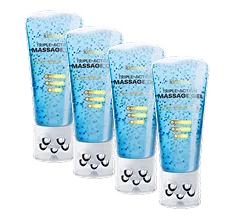
If back and neck tension are wearing on your mood and your evenings, the Kinzeno Magnetic Roller is the tool we recommend. It was designed exactly for quick, calming self-massage sessions that fit into a busy, tiring day:
- Five shiatsu-style steel rollers that massage as you glide and follow the curves of the neck and shoulders, with you in full control of the pressure.
- A botanical gel with 20+ ingredients, including menthol for a cooling feeling from the first stroke, plus arnica, MSM and allantoin. It releases as you roll, so your fingers stay clean.
- Fixed neodymium magnets in the head, the third layer the manufacturer highlights (we present its figures as manufacturer claims).
- Always within reach: small, silent and cordless, no batteries, fits in a desk drawer, a nightstand or a travel bag.
On the official site, the current promotion runs from $34.99 for one roller down to $19.99 per roller in the 4-pack ($79.96 total, up to 70% off). Standard shipping is $8.95, and every official-site order comes with a 60-day money-back guarantee. People with a pacemaker or other implanted electronic device should check with their doctor before using any product with magnets. You can compare every pack on our homepage or read the details in our full review.
Frequently Asked Questions
Can back pain affect your mental health?
Yes. Ongoing back pain often affects mood, patience, sleep and social life, and researchers note that negative mood states such as depression and anxiety are commonly observed in people with chronic low back pain. The link runs both ways: stress and poor sleep can also make pain feel worse.
Why does back pain make me so irritable?
Constant discomfort uses up energy and attention, interrupts sleep and makes small tasks harder, so your tolerance for everything else shrinks. Irritability is one of the most common emotional effects of ongoing pain and usually eases as pain and sleep improve.
Can stress make back pain worse?
Stress can increase muscle tension in the neck, shoulders and back, disturb sleep and make pain feel more intense. Calming routines such as gentle movement, slow breathing and self-massage can help break that cycle.
How do I cope with back pain emotionally?
Keep moving gently, protect your sleep, plan your day around good and bad moments, use quick relief routines such as self-massage, stay connected with people, track small improvements and talk to a professional if low mood or worry persists.
When should I get help for mood problems with back pain?
Talk to your doctor or a mental health professional if you feel down, hopeless or anxious most days for more than two weeks, lose interest in things you used to enjoy, or pain is stopping you from living your life. If you ever have thoughts of harming yourself, call or text 988 in the US.
Can a massage roller help with stress from back pain?
A massage roller is not a treatment for anxiety or depression, but a quick, calming self-massage routine can ease everyday muscle tension and give you a simple way to do something for yourself on a hard day. The Kinzeno Magnetic Roller combines five steel massage rollers with a cooling botanical gel.
Sources
- Affect and Low Back Pain: More to Consider than the Influence of Negative Affect Alone. Clinical Journal of Pain, 2016 (PubMed Central)
- MedlinePlus (NIH): Back pain
- NCCIH (NIH): Massage therapy, what you need to know
- Product details (rollers, gel ingredients, magnets, prices, shipping and 60-day guarantee) from the official Kinzeno site, as described in our review.