The Short Answer
Cool it when it's fresh, warm it when it's stiff. Ice or a cooling sensation suits a sore spot that feels warm, puffy and tender in the first day or two after a workout, a long hike or a weekend of yard work. Gentle heat suits the stiff, tight, "creaky" kind of ache — a morning lower back, a desk-worker's shoulders, knees that complain on the first flight of stairs. For everyday aches, the most practical tool we've found combines a cooling gel with massage in one step: the Kinzeno Magnetic Roller. If the pain followed an injury, or a joint is very swollen, hot or red, skip the home remedies and see a doctor.
Stand in front of the medicine cabinet with a sore shoulder and the debate starts: heating pad or ice pack? Everyone has an opinion, and half the internet seems to contradict the other half. The truth is simpler than it looks. Heat and cold do different jobs, so the right choice depends on what kind of ache you have and how long you've had it.
In this guide we'll compare the two side by side, give you a decision table you can screenshot, point out the mistakes that make either one backfire, and finish with the tool we recommend for the day-to-day soreness most of us actually deal with.
What Heat Does — and What Cold Does
Think of heat and cold as two dials on the same muscle.
- Heat turns the dial toward "loosen." Warmth encourages blood flow to the area, relaxes tight muscle fibers and makes stiff tissue feel more pliable. That's why a warm shower makes a stiff neck easier to turn.
- Cold turns the dial toward "calm." Cooling narrows local blood vessels and dulls the nerve endings that report pain. That's why an ice pack takes the edge off a freshly rolled ankle or a thigh that's throbbing the day after leg day.
Neither one "fixes" the underlying cause. Both are comfort tools that help you move, sleep and get on with your day while your body does the actual recovering. That's also why the question isn't which is better in general, but which is better right now.
Heat vs. Ice at a Glance
| Situation | Reach for | Why |
|---|---|---|
| Muscles sore and tender the day after a workout | Cooling | The area usually feels warm and puffy; cooling is more comfortable and calming |
| Stiff lower back or neck first thing in the morning | Heat | Nothing is inflamed — the muscles are tight and need to loosen |
| Knee that aches after a long walk or stairs | Cooling after, heat before | Cool the irritated joint after activity; warm it up before the next outing |
| Chronic achy shoulders from desk work | Heat + massage | This is tension, not injury; warmth and kneading release it |
| A fresh sprain, twist or "pop" | Cooling — and a doctor | Ice in the first 24–48 hours, but get it checked |
| Lingering soreness that's neither fresh nor stiff | Alternate (contrast) | A few minutes of each, repeated, feels good to many people |
| Before stretching or exercise | Heat | Warm tissue moves more freely |
| After exercise when the area feels hot | Cooling | Calms the area and takes the edge off |
If you remember just one line from this table: fresh and warm → cool it; old and stiff → warm it.
When Ice (or a Cooling Sensation) Wins
Cooling is the right call when the area is reacting to something that just happened:
- The first 24 to 48 hours after a hard session. The delayed soreness we explain in our guide to sore muscles after a workout often comes with a warm, swollen feeling. Cooling calms it.
- A joint that feels hot after activity. Knees after a hike, elbows after a tennis match, ankles after a long day on your feet.
- A flare-up of an old, familiar ache. If a spot that's usually quiet suddenly feels angry and puffy, cool it for that episode.
Two practical notes. First, an ice pack should never sit directly on bare skin — always use a cloth barrier and keep sessions to about 15 to 20 minutes. Second, a menthol gel is not a substitute for ice on an acute injury. Menthol creates a cooling sensation without dropping tissue temperature much. For everyday soreness, though, that sensation is exactly what most people are after — and it's far more convenient than a dripping bag of ice.
When Heat Wins
Heat is the better dial when the problem is stiffness and tension rather than freshness:
- Morning stiffness. A lower back that needs ten minutes to "wake up," or knees that creak on the way to the kitchen. We cover why this creeps in over the years in why joints hurt more as you age.
- Desk tension. The knotted upper back and neck of anyone who sits at a computer all day.
- Before you move. A warm shower or a heat pack before stretching or a workout makes tissue more willing.
- Muscle cramps and spasms. Warmth helps a clenched muscle let go.
The caution with heat is the mirror image of ice: don't put it on something that is freshly swollen or hot to the touch, and don't fall asleep on a heating pad. Ten to twenty minutes is plenty.
The Four Mistakes That Make Either One Backfire
- Heating a fresh, swollen injuryWarmth on a brand-new sprain or a hot, puffy joint tends to make it feel worse. Cool first; warm later.
- Icing stiffnessAn ice pack on a tight, cold, stiff muscle usually makes it tighter. Stiffness wants warmth and movement.
- Leaving it on too longBoth heat and cold can damage skin with long sessions. 15–20 minutes, cloth barrier, then a break.
- Using temperature instead of movementHeat and ice are the warm-up act. Gentle movement, stretching and self-massage are what keep the ache from coming back — which is where a massage roll-on earns its place.
Where Massage Fits In (and Why It Often Beats Both)
Here's the part most heat-vs-ice articles skip: for the everyday aches that make up 90% of what people are googling — sore thighs, a tight neck, an achy knee after stairs — massage does something neither temperature can. It physically works the tight fibers, improves how the area feels when you move, and gives you a sense of control over the sore spot. In our breakdown of massage, cooling and magnets, massage came out as the method with the most consistent everyday payoff.
The catch is convenience. Rubbing your own calf with a greasy cream is awkward, and a separate ice pack plus a separate massage session is more steps than most of us will keep up. That's why so many of our readers settled on a tool that does the cooling and the kneading at the same time: the Kinzeno Magnetic Roller.
A Simple Routine That Uses All Three
- Morning: warm up what's stiffA warm shower or 10 minutes of heat on the stiff area, then a few gentle stretches.
- Daytime: roll and cool the sore spotTwo to five minutes with a cooling massage roll-on over the tight muscle — around the knee, along the shoulders, down the calf. Not directly on bone or swollen tissue.
- After activity: cool what feels hotIf a joint feels warm after a workout or a long walk, 15–20 minutes of cooling with a cloth barrier, or a quick cooling roll over the muscles around it.
- Evening: heat for tension, cooling for freshnessChoose based on how it feels tonight, not on a rule you read once.
Give any routine a couple of weeks before judging it. Comfort builds with consistency.
When to Skip Both and See a Doctor
- The pain started with a fall, twist or pop.
- A joint is very swollen, hot or red, or you have a fever.
- You can't bear weight, or there's numbness, tingling or weakness.
- The pain is getting worse, wakes you at night or hasn't improved after a few weeks.
This article is general information, not medical advice. Heat, cold and massage are comfort tools for everyday aches — they don't replace an exam when something feels wrong.
Our Recommendation: The Kinzeno Magnetic Roller
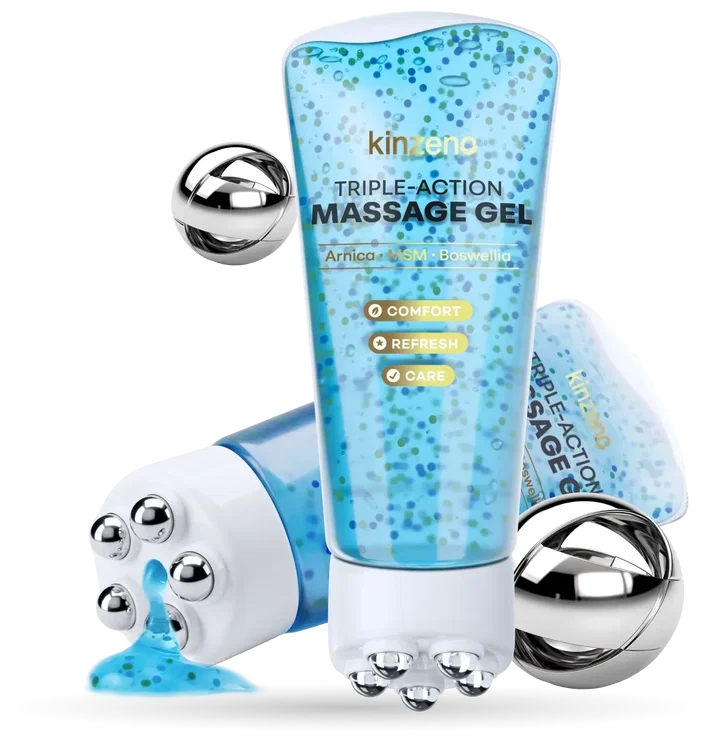
For the everyday soreness this whole debate is really about, the tool we recommend is the Kinzeno Magnetic Roller. It was designed for exactly this gap between "I should ice that" and "I should rub that out" — it does both in one two-minute pass, with no ice pack to prepare and no greasy hands afterward.
- Instant cooling sensation. The botanical gel leads with menthol, so the sore spot gets that cool, calming feel the moment you roll — the convenient everyday version of the "cool it" dial.
- Five shiatsu-style rollers. The head kneads the tight fibers as you glide, doing the massage your thumbs never quite manage on your own calf or shoulder.
- 20+ ingredients in a non-greasy gel. Alongside menthol you get arnica, MSM and allantoin, released as you roll, with nothing to wash off.
- Neodymium magnets in the head. A third layer the manufacturer highlights; we present the magnet figures as manufacturer claims.
- Pocket-size. It lives in a gym bag, a desk drawer or the nightstand — so the routine above actually happens.
On the official site, the current promotion runs from $34.99 for one roller down to $19.99 per roller in the 4-pack ($79.96 total, up to 70% off). Prices shown are the Subscribe & Save plan — billed monthly, cancel anytime — and a one-time purchase is also available at checkout. Every official-site order comes with a 60-day money-back guarantee, so you can try it in your real routine without risk. Results vary from person to person. It is not a substitute for proper first aid on an acute injury, and if you have a pacemaker or an electronic implant, get your doctor's approval before using a product with magnets.
Frequently Asked Questions
Should I use heat or ice for sore muscles after a workout?
For the first day or so after a hard workout, when the muscle feels warm, puffy and tender, most people find a cooling approach more comfortable. Once the soreness turns into stiffness, typically from day two onward, gentle heat and light massage tend to feel better and help you move more freely.
Is heat or ice better for stiff, achy joints?
Everyday stiffness, such as a creaky knee or a stiff lower back in the morning, usually responds best to gentle heat, which relaxes the muscles around the joint. If the joint feels warm and swollen after activity, switch to cooling for that episode. Many people alternate: heat before moving, cooling after.
How long should I apply heat or ice?
A common rule of thumb is about 15 to 20 minutes at a time, with a cloth or towel between the pack and your skin, and a break of at least 20 minutes before reapplying. Check your skin during the session and stop if it looks very red, pale or blotchy.
Can I alternate heat and ice?
Yes, many people alternate, often called contrast therapy, especially for lingering soreness that is no longer fresh. A typical pattern is a few minutes of warmth followed by a few minutes of cooling, repeated two or three times. Avoid alternating on a fresh injury that is still swelling.
Does a menthol gel count as ice?
Not exactly. Menthol creates a cooling sensation on the skin without actually lowering tissue temperature much, so it does not replace an ice pack on a fresh sprain. For everyday soreness and tight muscles, though, that cooling feeling combined with massage is pleasant and convenient, which is why cooling gels and roll-ons such as the Kinzeno Magnetic Roller are so popular.
When should I skip heat and ice and see a doctor?
See a doctor if the pain followed a fall, twist or pop, if a joint is very swollen, hot or red, if you cannot bear weight, if there is numbness or weakness, or if the pain keeps getting worse or has not improved after a few weeks. Heat and ice are comfort tools for everyday aches, not a substitute for an exam.