The Short Answer
There is no single "best" topical format for sore muscles: creams and gels cover big areas, roll-ons are clean and precise, patches are hands-free for one spot, and sprays reach awkward places quickly. The real difference is how well a format fits the area that hurts and your day, because the product you use consistently is the one that helps. For everyday neck, shoulder and back tension, our pick is a format that adds massage to a cooling gel in one step: the Kinzeno Magnetic Roller.
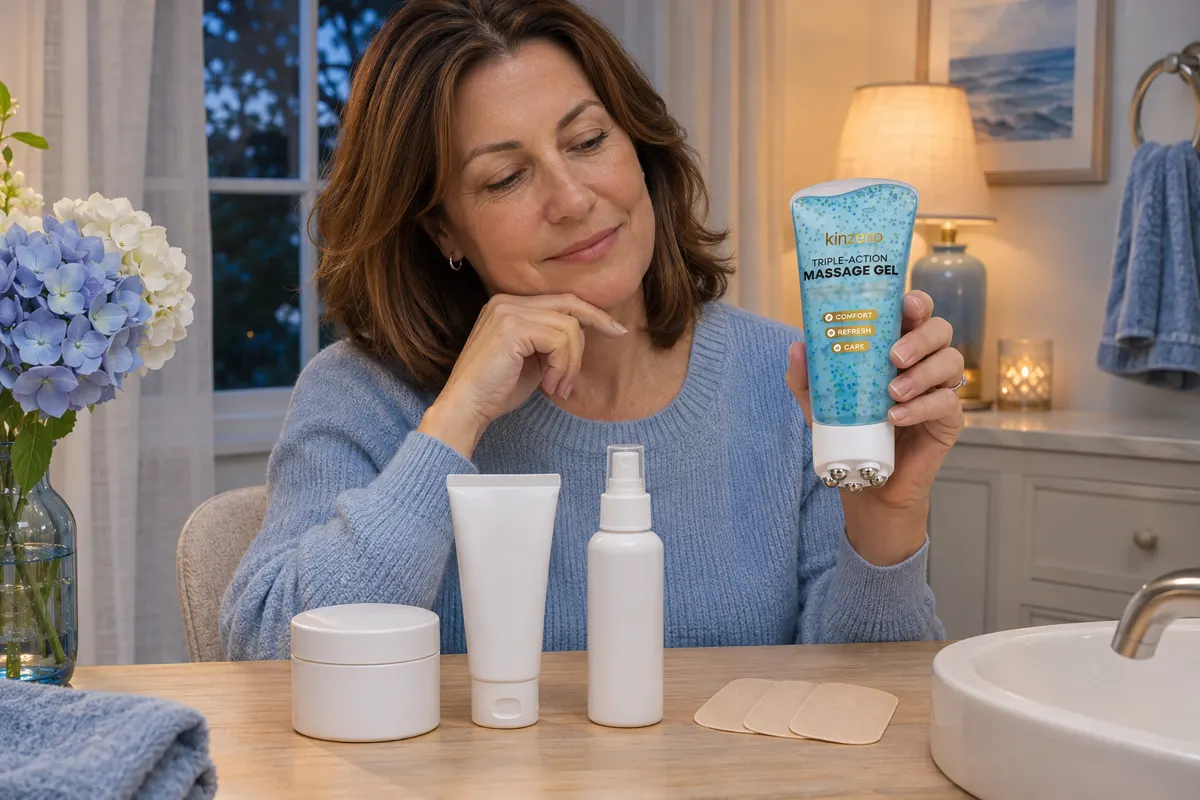
Walk down the pain relief aisle and the same few ingredients, often menthol, camphor or arnica, come in half a dozen packages: jars of cream, squeeze tubes of gel, roll-on sticks, patches, sprays and, more recently, roll-ons with massage heads. People search "roll-on vs. cream" because the format really does change the experience: how messy it is, how precisely it lands, whether it survives a workday in your bag.
This guide compares the six common formats for everyday muscle tension and soreness, who each one suits and where each one falls short. It is general information, not medical advice. Topical products are for everyday aches; they do not replace care for an injury or ongoing pain.
The formats at a glance
| Format | Best at | Watch out for | Suits |
|---|---|---|---|
| Cream | Large areas, rubbing in with a light massage | Greasy hands, slower to absorb, can stain clothes | Evening use at home, thighs and lower back |
| Gel | Large areas, light feel, dries fast | Still needs hands; can smear on clothing | Big muscles after exercise |
| Roll-on | Clean, precise, quick, travel-friendly | Covers less area per stroke; no real massage on its own | Neck, shoulders, on the go |
| Patch | Hands-free, steady coverage on one spot, no mess | Peels on curved or moving areas; adhesive can irritate skin | Long days, one fixed spot |
| Spray | Fast, touch-free, reaches the upper back | Hard to aim, can drift onto face or eyes | Quick cooling after sport |
| Massage roller with gel | Self-massage and a cooling gel in one step, one-handed, clean fingers | Not for the spine itself or broken skin | Daily neck, shoulder and back tension |
A note on claims: you will see marketing that one format "absorbs 10x faster". We have not found good evidence for blanket statements like that. What matters most is the active ingredient, its concentration and following the label, which is why our guide on how to read a pain relief cream label is worth two minutes before you buy anything.
Roll-on vs. cream: the direct comparison
This is the choice most people are actually making. Choose a cream or gel when the sore area is big, like the whole lower back or the thighs, and you are at home with time to rub it in. Choose a roll-on when the spot is specific, like the side of the neck or the top of the shoulders, when you are at work or travelling, or when you simply hate sticky hands. Many people end up with one of each: a tube for the gym bag and a roll-on for the desk.
Patches and sprays: when they make sense
Patches shine when one fixed spot aches through a long day, because they keep working while your hands stay free. They are less practical on the neck and shoulders, where movement tends to lift the edges. Sprays are handy for the upper back you cannot reach and for a quick cool-down after sport, but they are hard to aim and easy to overdo. Both are useful extras; few people use them as an everyday main tool.
Why adding massage changes the picture
Every format above delivers an ingredient to the skin. None of them works the muscle underneath, and gentle massage is one of the most popular ways people ease everyday tension, as the NCCIH notes in its overview of massage therapy. That is why many people pair a cream with a tennis ball or a foam roller. Our guide to tennis ball massage and other DIY tricks covers those options. A massage roller with gel simply puts both steps in one hand: the rollers press and glide while the gel is released, so a two-minute session happens at the desk, on the sofa or before bed.
Five questions to pick your format
- Where does it hurt? Big flat areas suit creams and gels; curved, specific areas suit roll-ons and rollers.
- When will you use it? At home in the evening, anything works. At work or on the road, choose something clean and compact.
- Do you want massage too? If yes, a roller with gel saves you a second tool.
- How sensitive is your skin? Patch-test any new product on a small area; adhesives and strong menthol bother some people.
- Will you actually use it every day? Consistency beats intensity. Pick the format that is easiest for you to reach for.
Safety tips for any topical format
- Use only on intact skin; never on cuts, rashes or irritated areas.
- Keep products away from your eyes and wash your hands after using creams and gels.
- Do not combine with heating pads or tight wraps unless the label allows it, and do not layer several products on one spot.
- Follow the label for how often to apply, and stop if your skin burns, blisters or becomes very red.
- People with a pacemaker or other implanted electronic device should check with their doctor before using any product with magnets.
Our Recommendation: The Kinzeno Magnetic Roller
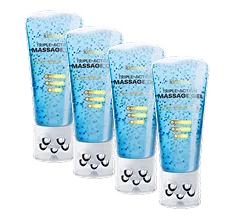
If your tension lives in the neck, shoulders and back, and you want something you will actually use every day, the Kinzeno Magnetic Roller is the format we recommend. It was designed exactly for quick one-handed sessions that combine self-massage and a cooling gel, with none of the mess of a jar or the peeling of a patch:
- Five shiatsu-style steel rollers that massage as you glide and follow the curves of the neck and shoulders, with you in full control of the pressure.
- A botanical gel with 20+ ingredients, including menthol for a cooling feeling from the first stroke, plus arnica, MSM and allantoin. It releases as you roll, so your fingers stay clean.
- Fixed neodymium magnets in the head, the third layer the manufacturer highlights (we present its figures as manufacturer claims).
- Roll-on convenience: small, silent and cordless, no batteries, fits in a desk drawer or a travel bag.
On the official site, the current promotion runs from $34.99 for one roller down to $19.99 per roller in the 4-pack ($79.96 total, up to 70% off). Standard shipping is $8.95, and every official-site order comes with a 60-day money-back guarantee. You can compare every pack on our homepage or read the details in our full review.
Frequently Asked Questions
Is a roll-on better than a cream for muscle pain?
Neither is better for everyone. A roll-on is cleaner and more precise, good for the neck, shoulders and on the go. A cream or gel rubbed in by hand covers large areas like the thighs or the whole lower back more easily. The best format is the one you will actually use consistently.
What is the difference between a pain relief gel and a cream?
Gels are usually water- or alcohol-based, feel lighter and dry quickly without a greasy film. Creams are thicker emulsions that take longer to absorb and can feel more moisturizing. The active ingredients and their percentages matter more than the base, so read the label.
Are pain relief patches better than creams?
Patches are the least messy and give steady, hands-free coverage on one spot, which many people like for a long day or overnight. They can peel off on curved or moving areas such as the neck, and some people find the adhesive irritating. Creams and roll-ons are easier on curved areas.
Can I use a roll-on and a patch at the same time?
Do not layer several topical pain products on the same spot, and never cover a product with heat or a tight wrap unless the label says it is fine. Using different products on the same area can increase the risk of skin irritation.
What makes a massage roller different from a regular roll-on?
A regular roll-on is mainly an applicator. A massage roller like the Kinzeno Magnetic Roller adds a head of five steel rollers that massage the muscle as the gel is applied, plus fixed magnets the manufacturer highlights (a manufacturer claim). It combines self-massage and a cooling botanical gel in one step.
When should I see a doctor instead of using a topical product?
See a doctor or physical therapist if pain is severe, follows a fall or injury, comes with numbness, tingling, weakness, swelling, redness or fever, gets worse, or lasts more than a couple of weeks. Topical products are for everyday muscle tension and soreness.
Sources
- NCCIH (NIH): Massage therapy, what you need to know
- Product details (rollers, gel ingredients, magnets, prices, shipping and 60-day guarantee) from the official Kinzeno site, as described in our review.