The Short Answer
A tennis ball against a wall is one of the best free ways to work on tight muscles around the shoulder blades and lower back: lean in, move slowly, 30 to 60 seconds per spot, never on the spine. A rolling pin, a frozen water bottle, a warm towel and a doorframe are useful household helpers too. Their limits show up fast, though: they are awkward on your own neck and shoulders, hard to control and easy to give up on. For quick, one-handed self-massage you can actually keep doing every day, we recommend the Kinzeno Magnetic Roller.
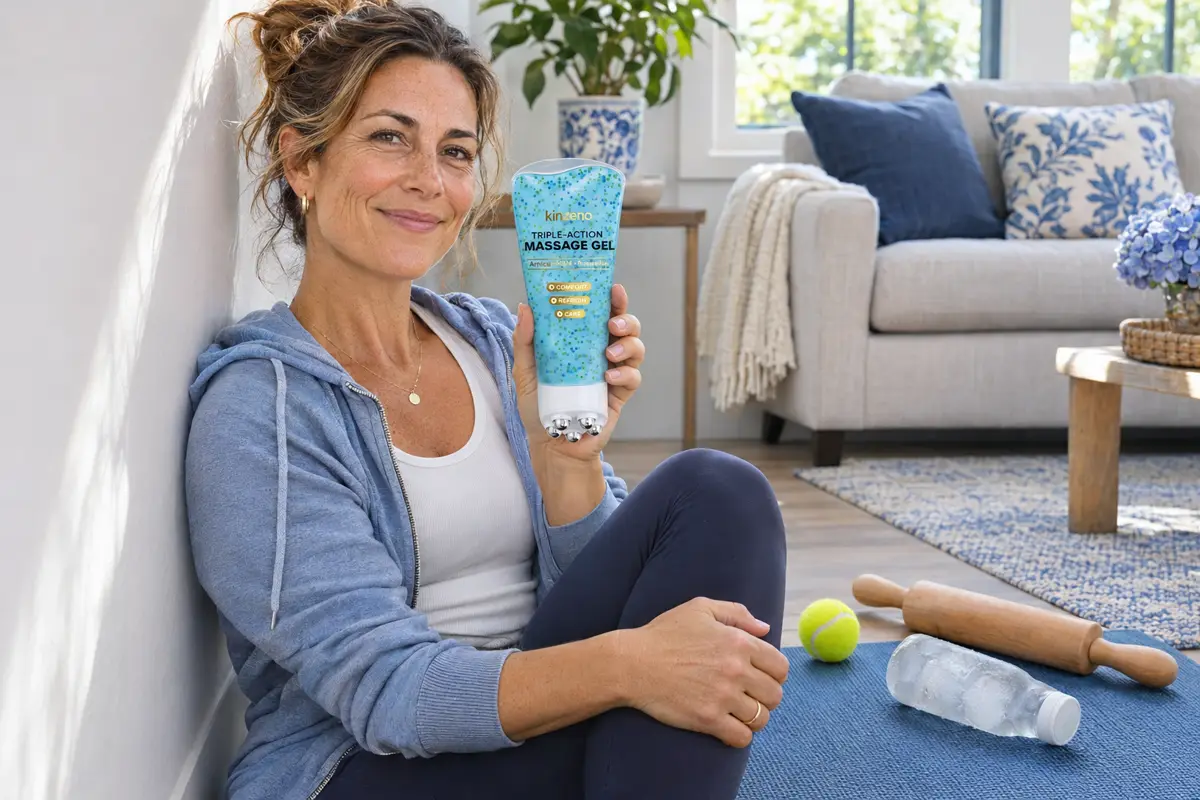
Almost everyone with a stiff back has tried it: wedging a tennis ball between their shoulder blade and a wall, rolling a water bottle under their foot, or asking someone to "just press there". Self-massage with household objects is popular because it is free, it is right there and, used well, it genuinely helps with everyday muscle tension. This guide walks through the six most common DIY tricks, how to do each one safely, where each one stops working, and why a ready-made massage roller is the easier daily option.
It is general information, not medical advice. Self-massage is for everyday muscle tension and soreness; it does not replace care for an injury or ongoing pain.
Why self-massage helps everyday tension
Tight muscles from desk work, driving, lifting kids or training often feel better with steady pressure and movement. The NIH's National Center for Complementary and Integrative Health notes that massage may help with some kinds of pain in the short term. Short, regular sessions tend to be more useful than an occasional long one, which is why a tool you can use in two minutes, every day, matters more than any single technique.
1. The tennis ball against a wall
How to do it: stand with your back to a wall. Place the ball between the wall and a tight muscle beside your spine, around a shoulder blade or on the side of your hip. Lean in gently, then bend your knees slightly and move your body slowly up and down or in small circles. Spend 30 to 60 seconds on each spot and breathe normally.
Variation: put two tennis balls in a sock and tie a knot so they sit side by side, then lean against the wall (or lie on your back with knees bent) with one ball on each side of your spine, as described in this self-massage guide from HealthLink BC. Keep sessions short; a few minutes a day is enough.
What it does well: precise pressure on hard-to-reach spots between the shoulder blades, for the price of a ball.
Where it stops: the ball slips and drops, it is hard to use on the neck, and lying on it on the floor can be too intense because your full body weight lands on one point. It also needs a free wall, which is not always there at the office.
2. The rolling pin
How to do it: sit down and roll a wooden rolling pin slowly along your thighs or calves with light pressure, or have someone roll it across your upper back.
What it does well: broad, even pressure on big leg muscles after a walk or workout.
Where it stops: almost impossible to use on your own back, shoulders or neck, and the pressure is wide rather than targeted.
3. The frozen water bottle
How to do it: freeze a sturdy plastic bottle of water and roll it under your foot, or along your forearm after typing, wrapped in a thin towel.
What it does well: combines a cooling feeling with gentle rolling, great for feet and forearms. For when cold or warmth makes more sense, see heat vs. ice for sore muscles.
Where it stops: it melts, it sweats, it is too big for the neck, and ice straight on the skin for too long is not a good idea.
4. The warm towel
How to do it: warm a damp towel (comfortably warm, never hot) or use a warm shower, then drape it over tight shoulders for a few minutes before stretching.
What it does well: relaxes the area and makes stretching feel easier, especially on cold November mornings.
Where it stops: warmth alone does not give the targeted pressure many tight spots need, and it cools down within minutes.
5. A lacrosse or golf ball
How to do it: same technique as the tennis ball, or roll a golf ball slowly under the arch of your foot while seated.
What it does well: firmer, more focused pressure than a tennis ball.
Where it stops: easily too hard, especially near bony areas; start gently and never use it on the spine or the neck.
6. The edge of a doorway
How to do it: place your forearms on either side of a doorframe and lean gently forward to open the chest, or lean the side of an upper shoulder lightly into the frame edge.
What it does well: a quick chest and shoulder stretch that counters hunched desk posture. Our desk routine for neck and shoulder tension includes it.
Where it stops: it is a stretch rather than a massage, and the hard edge is not kind to sensitive spots.
The DIY kit at a glance
| DIY trick | Best for | Main limit |
|---|---|---|
| Tennis ball + wall | Between the shoulder blades, beside the lower back, hips | Slips, needs a wall, hard on the neck |
| Rolling pin | Thighs and calves | Can't reach your own back |
| Frozen bottle | Feet and forearms | Melts, too big for the neck |
| Warm towel | Relaxing before stretching | No targeted pressure, cools fast |
| Lacrosse or golf ball | Firm pressure, feet | Easily too hard |
| Doorway | Chest and shoulder stretch | Stretch, not massage |
Safety tips for any self-massage
- Muscles only: never roll directly on the spine, on bruises, broken skin, varicose veins or the front of the neck.
- Comfortable pressure: it can feel intense, but never sharp. Ease off if it hurts.
- Short and regular beats long and hard: one to two minutes per area is plenty.
- See a professional if pain is severe, follows a fall or accident, comes with numbness, tingling or weakness, or lasts more than a couple of weeks. Not sure? Our home care or doctor self-check helps.
Where DIY tools fall short
Household tricks are a great start, and many people keep the tennis ball forever. But they share the same weaknesses: they are clumsy on your own neck and upper shoulders, the pressure is hard to control, most need a wall or a partner, and they do nothing more than press. That is the gap a purpose-built massage roller closes. It works one-handed, follows the curves of the neck and shoulders, and adds a soothing gel as you roll, so a two-minute session is easy enough to happen every day.
Our Recommendation: The Kinzeno Magnetic Roller
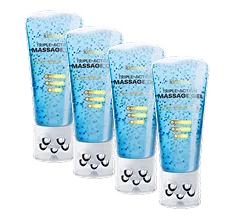
Keep the tennis ball for the spots between your shoulder blades. For quick daily self-massage on the neck, shoulders, lower back and calves, the Kinzeno Magnetic Roller is the tool we recommend. It was designed exactly for one-handed sessions that fit into a normal day, with no wall, partner or freezer needed:
- Five shiatsu-style steel rollers that apply steady, point-like pressure and follow the curves of the neck and shoulders, with you in full control of how firm it feels.
- A botanical gel with 20+ ingredients, including menthol for a cooling feeling from the first stroke (no frozen bottle required), plus arnica, MSM and allantoin. It releases as you roll, so your fingers stay clean.
- Fixed neodymium magnets in the head, the third layer the manufacturer highlights (we present its figures as manufacturer claims).
- Small, silent and cordless: no batteries, no charging, nothing to set up. It fits in a desk drawer or a travel bag.
On the official site, the current promotion runs from $34.99 for one roller down to $19.99 per roller in the 4-pack ($79.96 total, up to 70% off). Standard shipping is $8.95, and every official-site order comes with a 60-day money-back guarantee. You can compare every pack on our homepage or read the details in our full review.
Frequently Asked Questions
How do you use a tennis ball to massage your back?
Stand with your back against a wall and place the ball between the wall and a tight muscle beside your spine or around the shoulder blade. Lean in gently and move your body slowly up, down or in small circles for 30 to 60 seconds per spot. Keep the ball on the muscles, never directly on the spine, and use comfortable pressure.
Is a tennis ball massage good for lower back pain?
It can ease everyday muscle tightness around the lower back and hips for some people. Keep it gentle, avoid the spine itself and stop if pain becomes sharp. Severe, lasting or radiating back pain should be checked by a doctor or physical therapist.
Is lying on a tennis ball safe?
Lying on a ball on the floor puts your full body weight on one point and can be too intense. Starting against a wall lets you control the pressure much more easily. Avoid bony areas, bruises, injuries and the front of the neck.
What can I use instead of a massage tool at home?
A tennis ball, a rolling pin, a frozen water bottle, a warm towel or the edge of a doorframe can all help with everyday tension. They are free but less precise and harder to use on your own neck and shoulders. A handheld massage roller is easier to use one-handed, every day.
When should I see a doctor instead of self-massaging?
See a doctor or physical therapist if pain is severe, follows a fall or accident, comes with numbness, tingling or weakness, swelling, redness or fever, gets worse over time or lasts more than a couple of weeks.
Sources
- NCCIH (NIH): Massage therapy, what you need to know
- HealthLink BC (Healthwise): Self-massage
- Product details (rollers, gel ingredients, magnets, prices, shipping and 60-day guarantee) from the official Kinzeno site, as described in our review.