The Short Answer
Long holiday drives and flights leave your back and neck stiff because you sit in one position for hours, with your hips bent and your head forward, and then lift heavy bags at both ends. The fix is a simple plan: set up your seat and pack light before you go, move every 60–90 minutes on the way, and walk, warm up and massage the tight spots when you arrive. For that last step, the tool we recommend packing is the Kinzeno Magnetic Roller, a pocket-size cooling massage roll-on. Pain that spreads down a leg, or a swollen, warm calf after a long trip, needs a doctor.
Thanksgiving through New Year's is the busiest travel stretch of the year in the U.S. For a lot of us that means a five-hour drive to the in-laws, a cross-country flight with a connection, or both. You arrive happy to see everyone — and then you stand up out of the car and your lower back feels like it's made of concrete, or you wake up on the pull-out couch with a neck that won't turn left.
Travel stiffness is extremely common, and the good news is that most of it is muscular and very preventable. Below we explain why travel is so hard on your back, then give you a 9-step checklist split into before, during and after the trip, so you spend the holidays enjoying the people instead of nursing your spine.
Why Travel Is So Hard on Your Back and Neck
- Hours in one position. Car and airplane seats keep your hips bent and your lower back rounded. Muscles that hold one position for hours tire, tighten and lose their usual give.
- Vibration and bracing. On the road, your core and legs make constant small corrections to the car's movement. It doesn't feel like work, but your back muscles are on duty the whole drive.
- Head-forward posture. Looking down at a phone, tablet or book for hours on a plane loads the neck and upper back — the same pattern we explain in our desk-work neck and shoulder routine.
- Lifting at awkward angles. Hauling a heavy suitcase out of a trunk or into an overhead bin, often twisted and in a hurry, is one of the most common ways a stiff back turns into a sore one.
- Sleeping somewhere new. A sagging guest bed, an air mattress or a hotel pillow that's too high can leave you stiffer the next morning than the trip itself.
- Cold weather. Late-year travel often means cold parking lots and drafty terminals, and cold muscles feel tighter. Our guide to heat vs. ice explains why warmth helps stiffness.
Your 9-Step Holiday Travel Checklist
Before you leave
- Pack lighter — and pack smartTwo medium bags are easier on your back than one huge one. Choose a rolling suitcase, keep your carry-on light enough to lift overhead without straining, and put the heavy items close to the wheels.
- Set up the driver's seat before you startSit all the way back, raise the seat so your hips are about level with or slightly above your knees, bring it close enough that your knees stay softly bent, and tilt the backrest only slightly. Adjust the mirrors to this posture so you don't slump.
- Pack a small "back kit"A rolled towel or small lumbar pillow for the curve of your lower back, a travel neck pillow for flights, a water bottle, and a pocket-size massage roll-on for the stops and the evening. It all fits in a tote bag.
On the road or in the air
- Support your lower backPlace the rolled towel or lumbar pillow just above your belt line. It keeps the natural curve of your lower back instead of letting it round for hours — a small change most people feel right away.
- Move every 60–90 minutesOn a drive, plan short stops: get out, walk for two or three minutes, and do a few gentle standing back extensions (hands on hips, lean back slightly). On a flight, stand and walk the aisle when it's safe, and do ankle circles and seated knee lifts in between. Moving also helps circulation on long trips.
- Reset your neck and shouldersEvery 30–45 minutes, roll your shoulders back five times, gently turn your head side to side, and lift your screen closer to eye level. If you plan to sleep on a plane, a supportive travel pillow keeps your head from dropping to one side.
When you arrive
- Lift with your legsUnload the trunk by stepping close to the bag, bending your knees and keeping the bag near your body. Turn with your feet instead of twisting your back — this one habit prevents a lot of holiday back pain. If your back has ever "locked" after lifting, you know why it matters.
- Walk, warm up and massageA 10–15 minute walk soon after you arrive undoes much of the stiffness. Follow it with a warm shower and a few minutes of light massage over the lower back, neck and shoulders. A roll-on like the Kinzeno Magnetic Roller makes this easy to do yourself, even on hard-to-reach spots, without asking a relative for a back rub.
- Make the guest bed work for youIf the mattress sags, a pillow under your knees (on your back) or between your knees (on your side) takes pressure off your lower back. Keep your pillow height so your neck stays in line with your spine, and start the next morning with two minutes of gentle movement before you get out of bed.
Quick Reference: Drive vs. Flight
| Situation | What usually tightens | Best quick fix |
|---|---|---|
| Long drive | Lower back, hips, right leg and foot | Lumbar roll, stops every 60–90 min, standing back extensions |
| Flight | Neck, upper back, calves | Neck pillow, shoulder rolls, aisle walks, ankle circles |
| Airport and luggage | Lower back, shoulders | Rolling bag, lift with legs, turn with your feet |
| Guest bed or couch | Lower back, neck | Pillow under or between knees, gentle morning movement |
Common Travel Mistakes
- "Let's just push through and get there." Skipping every stop saves 20 minutes and costs you two stiff days.
- Twisting to grab bags from the back seat. Get out and open the rear door instead.
- Collapsing on the couch after arrival. It feels great for ten minutes; a short walk feels better for the rest of the evening.
- Forgetting water. Long drives and dry cabin air make it easy to drink less than usual.
- Ignoring a familiar weak spot. If your knees complain on stairs, plan for it — our knee pain on stairs guide has simple ideas.
When to See a Doctor
Ordinary travel stiffness improves within a day or two of moving normally. See a doctor if the pain is severe or getting worse, if it spreads down a leg with numbness, tingling or weakness, if it hasn't clearly improved within a week or two, or if it started with a fall or a lifting injury. Seek care right away for a swollen, warm, painful calf or sudden shortness of breath after a long drive or flight, or for any loss of bladder or bowel control. This article is general information, not medical advice.
Our Recommendation: The Kinzeno Magnetic Roller
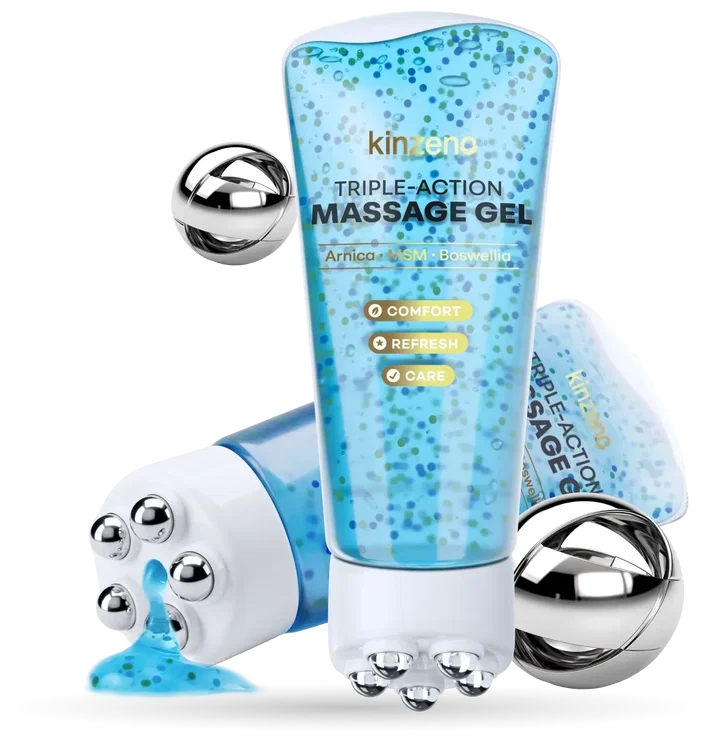
If there's one thing we'd add to your holiday travel bag, it's the Kinzeno Magnetic Roller. It turns the "massage the tight spots" step — the one almost everyone skips when they're tired and away from home — into a two-minute routine at a rest stop, in the hotel room or on the guest bed:
- Pocket-size and mess-free. It fits in a glove box, a tote or a carry-on kit, and there's nothing greasy to wash off your hands before you get back on the road.
- Five shiatsu-style rollers. Even, gentle pressure that works well on a stiff lower back, tight shoulders and the base of the neck — and you can reach your own upper back without a helper.
- Cooling botanical gel with 20+ ingredients. Menthol for a fresh, cooling feel the moment you roll, plus arnica, MSM and allantoin, released as you go.
- Neodymium magnets in the head. A third layer the manufacturer highlights; we present the magnet figures as manufacturer claims.
On the official site, the current promotion runs from $34.99 for one roller down to $19.99 per roller in the 4-pack ($79.96 total, up to 70% off) — handy if more than one person in the family is making the trip (it also makes an easy present; see our gift guide for someone with back or neck pain). Prices shown are the Subscribe & Save plan — billed monthly, cancel anytime — and a one-time purchase is also available at checkout. Every official-site order comes with a 60-day money-back guarantee, so you can try it through the whole holiday season without risk. Results vary from person to person. If you have a pacemaker or an electronic implant, get your doctor's approval before using a product with magnets.
Frequently Asked Questions
Why does my back hurt after a long car ride?
Hours in a car seat hold your hips bent and your lower back rounded in one position, while road vibration and bracing your legs keep the muscles working without a break. The muscles tire and stiffen, the lower back loses its natural curve, and when you finally stand up everything feels tight. Lifting heavy bags in and out of the trunk adds to the load.
How often should I stop on a long drive to protect my back?
A good rule of thumb is to stop roughly every 60 to 90 minutes, get out of the car and walk for a few minutes. Even a two-minute walk around the gas station with a couple of gentle back extensions resets the muscles far better than pushing through four hours in a row.
How do I keep my neck from getting stiff on a flight?
Use a supportive travel pillow if you plan to sleep, keep your screen closer to eye level instead of looking down for hours, and do slow shoulder rolls and gentle neck turns every 30 to 45 minutes. When it is safe to do so, stand up and walk the aisle. A short massage of the neck and shoulders after landing helps release what built up.
What helps a stiff back after traveling?
Walk for 10 to 15 minutes soon after you arrive, take a warm shower, do a few gentle stretches for the lower back and hips, and give the tight areas a few minutes of light massage. Sleep on a supportive surface the first night if you can, and keep moving the next day rather than resting completely.
When is back pain after travel a reason to see a doctor?
See a doctor if the pain is severe or getting worse, if it spreads down a leg with numbness, tingling or weakness, if it does not clearly improve within a week or two, or if it came with a fall or lifting injury. Seek care right away for a swollen, warm, painful calf or sudden shortness of breath after a long trip, or for any loss of bladder or bowel control.
Can I bring the Kinzeno Magnetic Roller on a plane?
It is a small roll-on, so it fits easily in a carry-on or travel kit. For carry-on bags, TSA limits gels and liquids to containers of 3.4 ounces (100 ml) or less inside your quart-size bag, so check the size on the label and the current TSA rules before you fly, or pack it in your checked bag. If you have a pacemaker or an electronic implant, ask your doctor before using a product with magnets.